
Puppy & Kitten Care
Start Strong. Grow Healthy.
Puppy & Kitten Care in Glendale and Phoenix, AZ
At Pet Life Veterinary Clinic, we view the first year as the foundation for the rest of your pet’s life. We provide full puppy & kitten care at our Arrowhead facility in Glendale and our Paradise Valley site in Phoenix.
Bringing home a puppy or kitten is exciting. It is also a lot at once. Vaccines, feeding, parasites, training, socialization, scheduling of spay or neuter, microchipping and daily safety all fall into the same few months.
How We Approach Puppy and Kitten Care
One of the things that sets our program apart is that we do not run the first year as a string of quick shot visits.
At many clinics the early appointments blur together. Your pet gets an injection, you get a card with a date on it, and you head home with questions you did not get to ask. Then something happens at 9pm and you are searching the internet instead of calling someone who knows your pet.
Instead, we create a first-year plan. On the initial appointment we check your puppy or kitten, review any documents that come with them and explain what occurs in the next several months and why. Every follow-up is an actual recheck, not just a shot. Young animals change fast, and problems that were not obvious at eight weeks are often clear at twelve.
Every plan is individualized based on age, breed, estimated mature size, history, lifestyle and potential exposure. This stage should include physical health, diet, behavior, parasites, immunizations, dental care, reproductive planning and owner education, according to AAHA guidelines.
You should leave with a clear plan, not unexplained treatments and a confusing list of future appointments.
What Your New Pet Needs This Year
Puppy and kitten care may include:
- A full first physical exam
- Review of breeder, rescue, or shelter records
- A personalized vaccination schedule
- Stool testing and deworming
- Flea, tick, and heartworm prevention
- Feline leukemia and FIV testing
- Nutrition and feeding guidance
- Growth and healthy weight monitoring
- Socialization, training, and behavior support
- House training and litter box advice
- Spay or neuter planning
- Microchipping and Maricopa County licensing guidance
- Prep for travel, boarding, grooming, or daycare

The First Visit
New pets should be examined soon after you bring them home, even when they look perfectly healthy. Young animals may have intestinal parasites, respiratory diseases, skin disease or congenital problems that are not visible.
What to Bring:
- Vaccination and deworming records
- Adoption or breeder information
- Past lab work
- Microchip info
- Any medications or supplements
- A photo of the food label and a fresh stool sample when requested
Let us know about vomiting, diarrhea, coughing, sneezing, and changes in appetite.
Records matter more than people expect. Knowing the name and date of each vaccine tells us what your pet is genuinely protected against. A note claiming a pet has “all shots” does not. If your puppy or kitten didn’t come with solid records, we don’t presume the protection is complete, but instead we develop a safe catch-up strategy.
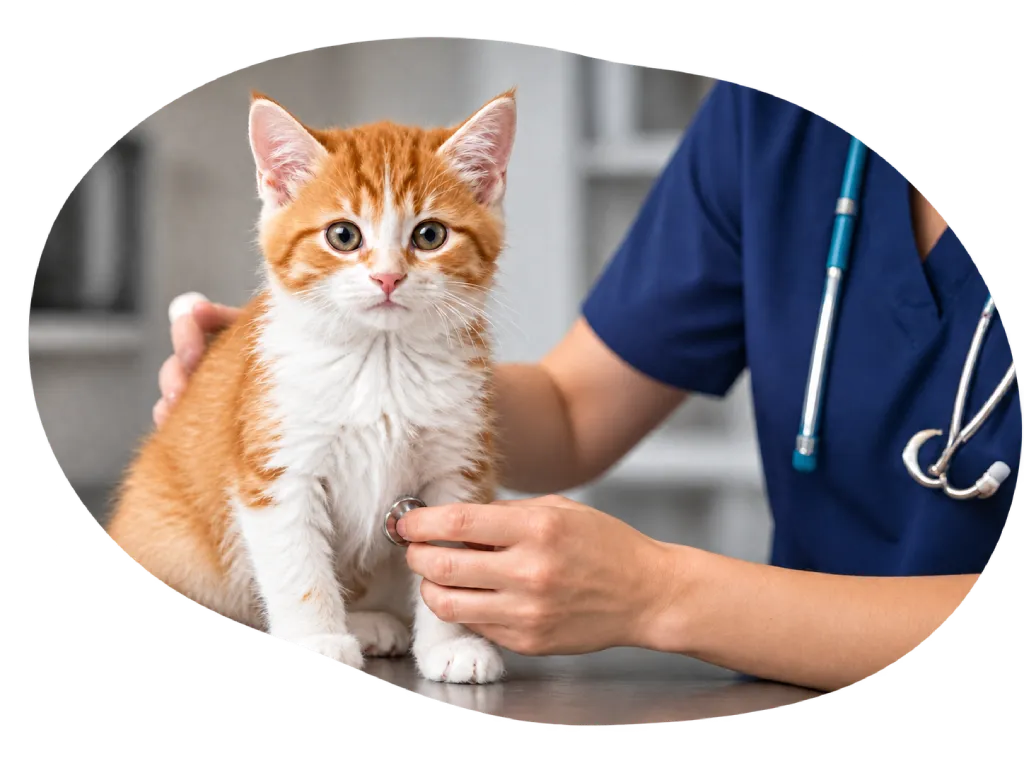
During the checkup we evaluate:
- Weight and body condition
- Temperature
- Heart and lungs
- Eyes
- Ears
- Nose and mouth
- Teeth and bite development
- Skin and coat
- Lymph nodes
- Abdomen
- Joints and mobility
- The umbilical area and any evidence of fleas, mites or developmental abnormalities
-
Vaccines in the First Year
Puppies and kittens require a series of immunizations, not just one shot. Antibodies inherited from their mother can block early vaccines from working, and those antibodies fade at different times in different animals. That’s why doses repeat.
Puppies start core DA2PP vaccines around six to eight weeks and repeat every two to four weeks until at least 16 weeks old, with leptospirosis beginning at 12 weeks and rabies at the legally appropriate age. Kittens start FVRCP around six to eight weeks, add feline leukemia when appropriate, and receive rabies based on age and protocol.
Keep puppies away from busy dog areas until the series is finished. Parvovirus is extremely hazardous for young, partially immunized puppies. Safe, controlled socializing still matters and we will show you how to do both.
See our dog and cat vaccinations page for the full schedule.
-
Parasites, Deworming, and Prevention
Puppies and kittens often get intestinal parasites from their mother, dirt, fleas or prey. Roundworms, hookworms, whipworms, tapeworms, coccidia or giardia might be present in stool that looks perfectly normal.
We do a fecal test and deworm based on age, weight, results, symptoms, and past treatment. Even if the breeder or shelter administered a dose, your pet may still require deworming. Different products target different parasites and several only eliminate certain life stages. CAPC recommends monthly broad-spectrum parasite control until six months of age, then year round protection.
Heartworm prevention matters here. Dogs in Phoenix and Glendale should stay on it consistently. Cats can be affected by heartworm as well and there is no analogous treatment for adult infection in cats thus prevention is the only real protection. Living indoors does not remove your pet’s exposure to mosquitoes.
For fleas and ticks, use only products approved for your pet’s species, age, and weight. Some dog products are dangerous to cats. Never split, swap, or combine parasite products without asking us first.
-
Food and Growing Healthy
The right diet during this stage supports bones, muscle, brain development, and immune function.
Puppies need food formulated for growth, and large-breed puppies often need a diet built for controlled skeletal development. Kittens need feline growth food, which is nutritionally very different from puppy or adult dog food.
More food does not imply better growth. Too many calories can lead to rapid weight gain, which is especially risky for large-breed dogs that are still growing. Skip extra calcium, vitamins or supplements unless we find a specific need. A complete growth diet is already balanced.
We weigh at every recheck and evaluate physical condition, not simply the number on the scale. If you find your puppy or kitten is not gaining weight, has a distended belly, does not eat well, is always hungry but remains thin, vomits often or gains weight too quickly, call us.
-
Spay, Neuter, and Microchipping
Spaying or neutering prevents unwanted litters and can reduce some reproductive diseases and hormone-driven behaviors. The best timing is not the same for every pet. For dogs we consider sex, breed, estimated adult size, orthopedic development, behavior and household situation. AAHA suggests this strategy be customized, rather than a fixed age. For cats we use age, weight, development and health as a guideline.
A microchip is permanent identification if your pet is ever lost and arrives somewhere with a scanner. It is not GPS, and it only works if you register it. Register the chip immediately, keep your phone number up-to-date and have a visible ID tag on your pet. The AVMA recommends using both. Microchipping can often be done during spay or neuter surgery.
-
Arizona Heat and Outdoor Safety
Young pets overheat quickly. Never leave one in a parked vehicle. Walk at cooler times of the day. Test the temperature of the pavement by putting your hand on it first. Have shade and fresh water accessible. Avoid intense exertion in high heat. Look for heavy panting, weakness, vomiting, confusion, or collapse. Very young, flat-faced, thick-coated, or overweight pets overheat sooner.
Keep kittens indoors unless you have a controlled outdoor enclosure.

When to Call Us
Young animals go downhill faster than healthy adults. Call immediately for repeated vomiting, frequent or bloody diarrhea, refusal to eat, marked weakness, persistent coughing, difficulty breathing, eye or nasal discharge, a swollen or painful belly, pale gums, straining to urinate, seizure, collapse, a suspected toxin, a swallowed object, a fall or bite, or facial swelling following a vaccine.
One mild symptom is not always an emergency. Age, size, and how long it has lasted all matter. When you are not sure, call. That is what we are here for.
Schedule Your Puppy or Kitten's First Appointment
Give your new companion a healthy start with a real first-year plan.
Book at our Arrowhead-Glendale or Paradise Valley-Phoenix clinic. Bring any records you have, and a fresh stool sample when required. We will examine your pet, review what has previously been done, answer any questions you may have and explain exactly what is next.
We are always here whenever your pet needs us.
Send us a message
Arrowhead Location
Monday: 8AM-5PM
Tuesday – Friday: 8AM-6PM
Paradise Valley
Monday-Tuesday: CLOSED
Wednesday: 8AM-4PM
Thursday-Saturday: 8AM-6PM
Sunday: 8AM-12PM